

Services
Neumeter offers a wide range of services, including 3D laser scanning, as-built drawings, BIM modeling, and custom layouts. We have a team of skilled professionals who ensure top-quality documentation solutions for our clients.
01.
3D Laser Scanning
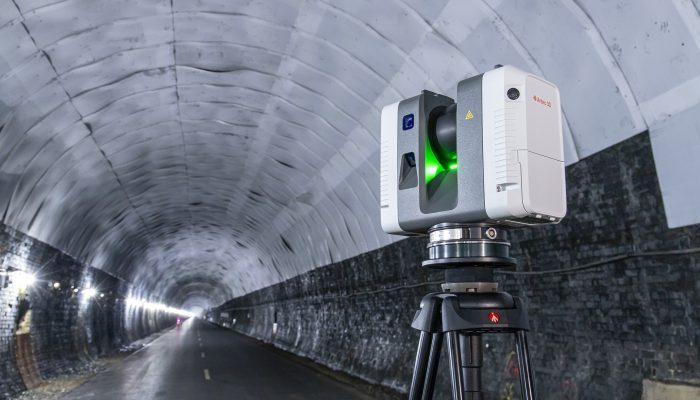
3D laser scanning employs LiDAR to capture precise building dimensions, locations, and layouts, generating accurate as-built drawings and 3D BIM models. Our cutting-edge laser scanning technology records millions of measurement points in minutes, documenting every architectural detail, structural component, and MEP system with millimeter precision. This thorough data collection eliminates errors and guesswork common in traditional surveying, providing architects, engineers, and construction professionals with a reliable digital record of existing conditions to support informed design decisions.
Read MoreLess
What sets professional laser scanning apart is its ability to capture complex geometries, irregular surfaces, and intricate details that would be time-consuming or impossible to measure manually. From ornate historical facades to complex mechanical rooms filled with piping and ductwork, our scanning technology documents everything visible within the space. This includes MEP systems when specifically requested, providing detailed documentation of mechanical, electrical, and plumbing components that are often hidden or difficult to access through conventional measurement methods.
The applications for 3D laser scanning are extensive across multiple industries and project types. Renovation projects benefit from accurate existing conditions documentation that prevents costly design conflicts and change orders. Historic preservation efforts rely on laser scanning to create detailed records of irreplaceable architectural elements. Facility management teams use scan data to maintain accurate building records and plan system upgrades. Even new construction projects utilize scanning to verify installation accuracy and document as-built conditions for future reference.
02.
As-Built Drawings
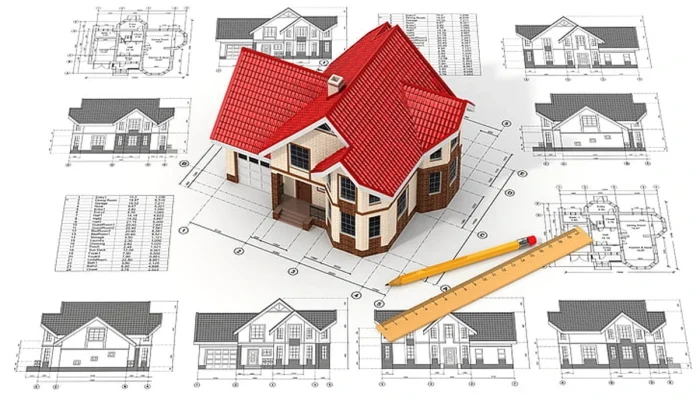
As-built drawings accurately document constructed facilities, reflecting all modifications, field changes, and installation variations during construction. Our as-built surveys and digital twins deliver precise spatial data for renovations, facility management, or documenting structures, ensuring projects stay on time, within budget, and with exceptional clarity. These vital records bridge design intent and construction reality, providing architects, engineers, contractors, and facility managers with reliable data on actual building conditions, surpassing theoretical design drawings.
Read MoreLess
Traditional as-built creation methods often relied on manual measurements and field sketches, processes that were time-consuming, prone to human error, and frequently incomplete. Modern laser scanning technology revolutionizes this process by capturing comprehensive building data in a fraction of the time while maintaining superior accuracy. The point cloud data serves as a permanent digital record that can be referenced throughout the drawing creation process, eliminating the need for return visits and reducing the risk of missing critical details that could impact project success.
The value of accurate as-built drawings extends far beyond the initial documentation project. These drawings become essential references for facility management, space planning, regulatory compliance, and future renovation projects. Property owners rely on as-built documentation for lease negotiations, requiring accurate square footage calculations and space configurations. Architects and engineers use these drawings as the starting point for design development, confident that the underlying building information is reliable and current. Emergency responders and maintenance personnel benefit from accurate building layouts that help them navigate complex facilities safely and efficiently.
Documentation requirements?
From historic renovations requiring detailed documentation to new construction needing verification surveys, every project has specific requirements. Our comprehensive scanning services provide the accurate spatial data you need.
03.
3D BIM (Scan to BIM)
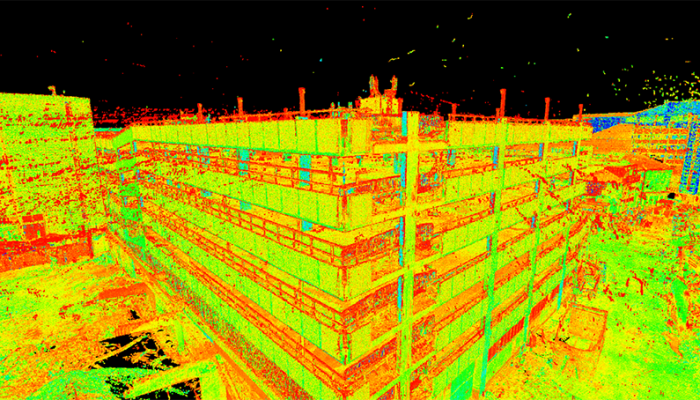
The scan to BIM process turns millions of points of data into a single source of BIM truth. It improves speed and accuracy across all design and construction workflows. Building Information Modeling represents the evolution from traditional 2D documentation to intelligent, data-rich 3D models that contain geometric information alongside valuable building component data. Our scan-to-BIM services transform laser scan point clouds into parametric building models that serve as collaborative platforms for architects, engineers, contractors, and facility managers throughout the entire building lifecycle.
Read MoreLess
04.
Custom Layouts
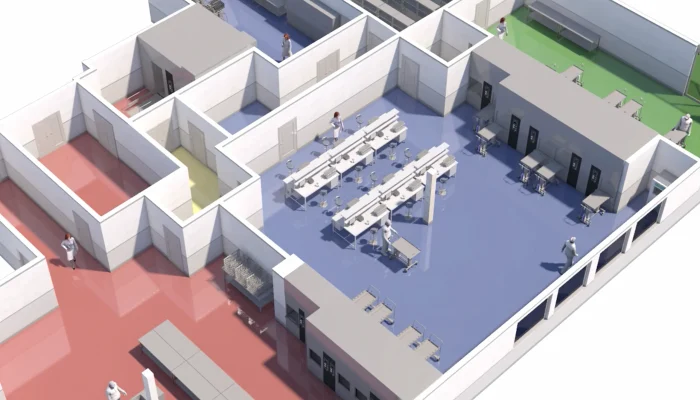
Custom layout services combine precise laser-scanned data of existing conditions with expert space planning to create optimized solutions that maximize functionality while respecting building systems and structural constraints. Our approach starts with thorough documentation of current site conditions, followed by applying advanced space planning principles and industry standards to design tailored layouts that fulfill specific programmatic requirements, ensuring full compliance with building codes, accessibility regulations, and operational efficiency objectives for seamless project execution.
Read MoreLess
We are helping businesses document buildings with the best quality and precision.
Professionals across industries trust Neumeter for reliable building documentation. Our laser scanning technology ensures precise measurements every time.